
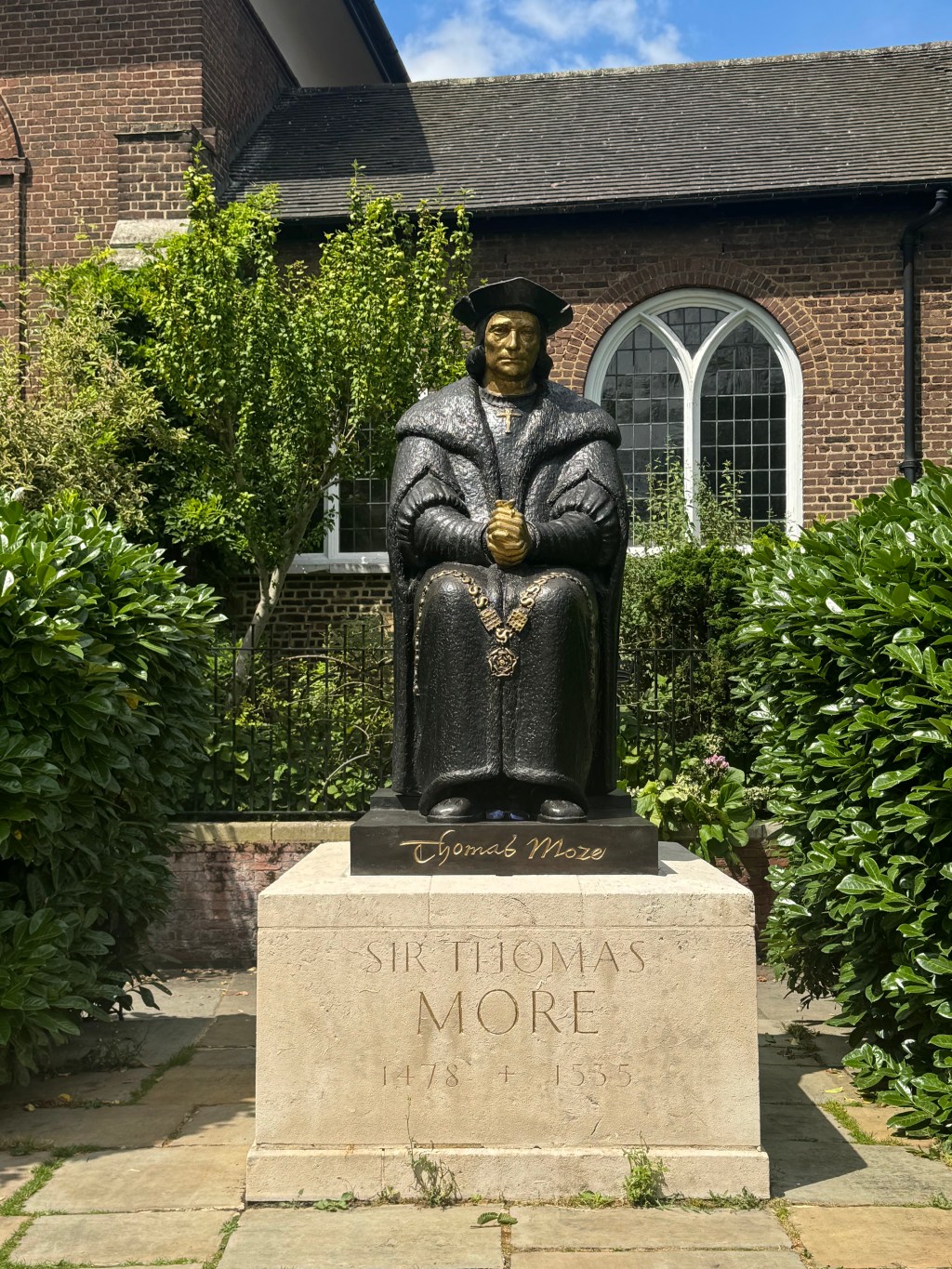
The Man, the Martyr, and His London Legacy
If you’re into history or just someone who enjoys a good story, you will want to explore the life of St. Thomas More. He was more than just a historical figure – he was a scholar, lawyer, close advisor to King Henry VIII, and ultimately, a man who lost his life for his beliefs. If you are ever in London, you can walk in his footsteps.
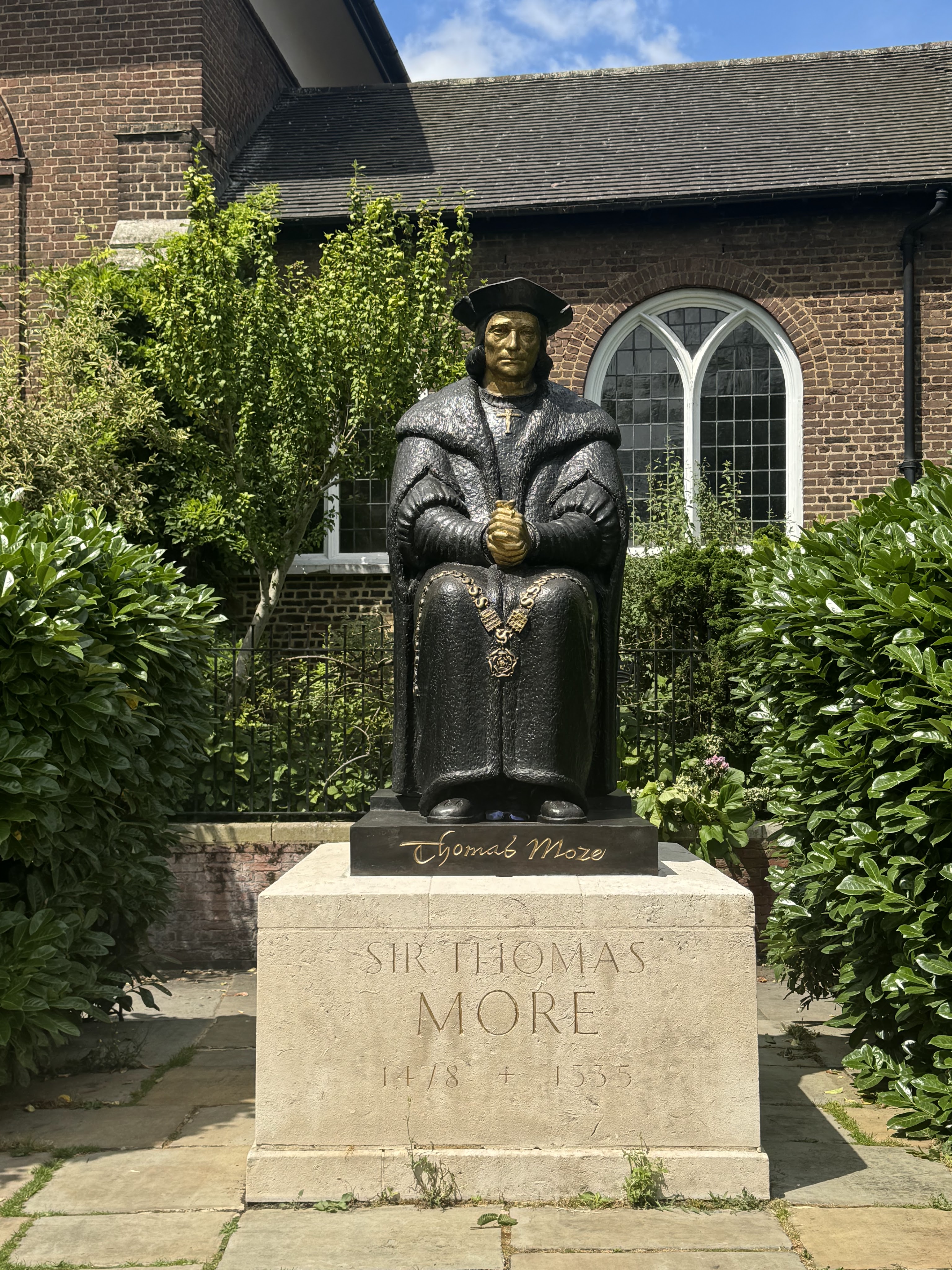
St. Thomas More was born in 1478 in the heart of London. He studied at Oxford, became a lawyer at Lincoln’s Inn, and served as Lord Chancellor under King Henry VIII – a position second only to the king. Despite his high status, More was known for his integrity and his refusal to compromise on his principles.
More wasn’t just any politician; he was deeply committed to his Catholic faith. When King Henry VIII decided to break away from the Catholic Church and named himself the Supreme Head of the Church of England because the Pope wouldn’t grant him a divorce to Catherine of Aragon, More did not agree. He believed the Pope was the true head of the Church, not the king. His refusal to wasn’t just a political act; it was a statement of his religious convictions. In 1935, nearly 400 years after his death, the Catholic Church canonized him as a saint, recognizing him as a “Martyr of the Papal Supremacy”.
When St. Thomas More refused to take the Oath of Supremacy declaring Henry as the head of the Church, he was accused of treason. During his imprisonment in the Tower of London, More was given multiple chances to change his mind, but he remained steadfast. He spent over a year in prison where he wrote letters to his family and continued to stand by his beliefs. On July 6, 1535, Sir Thomas More was beheaded at Tower Hill. His famous last words were, “I die the King’s good servant, but God’s first.”
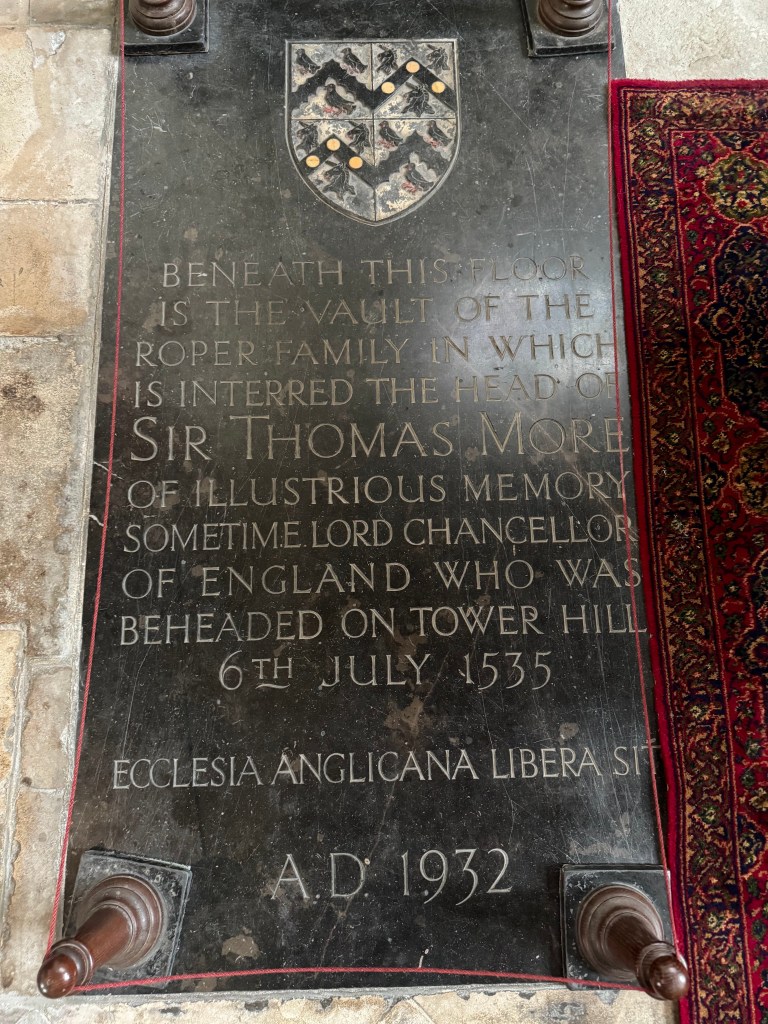
After his death, St. Thomas More was buried in the Chapel of St. Peter ad Vincula within the Tower of London, though his head was put on display on London Bridge. His family later managed to retrieve his head, and it was preserved as a relic. It is said it is buried in St. Dunstan’s Church just outside Canterbury.
If you’re in London and want to connect with the history of St. Thomas More, there are several key sites you should visit:
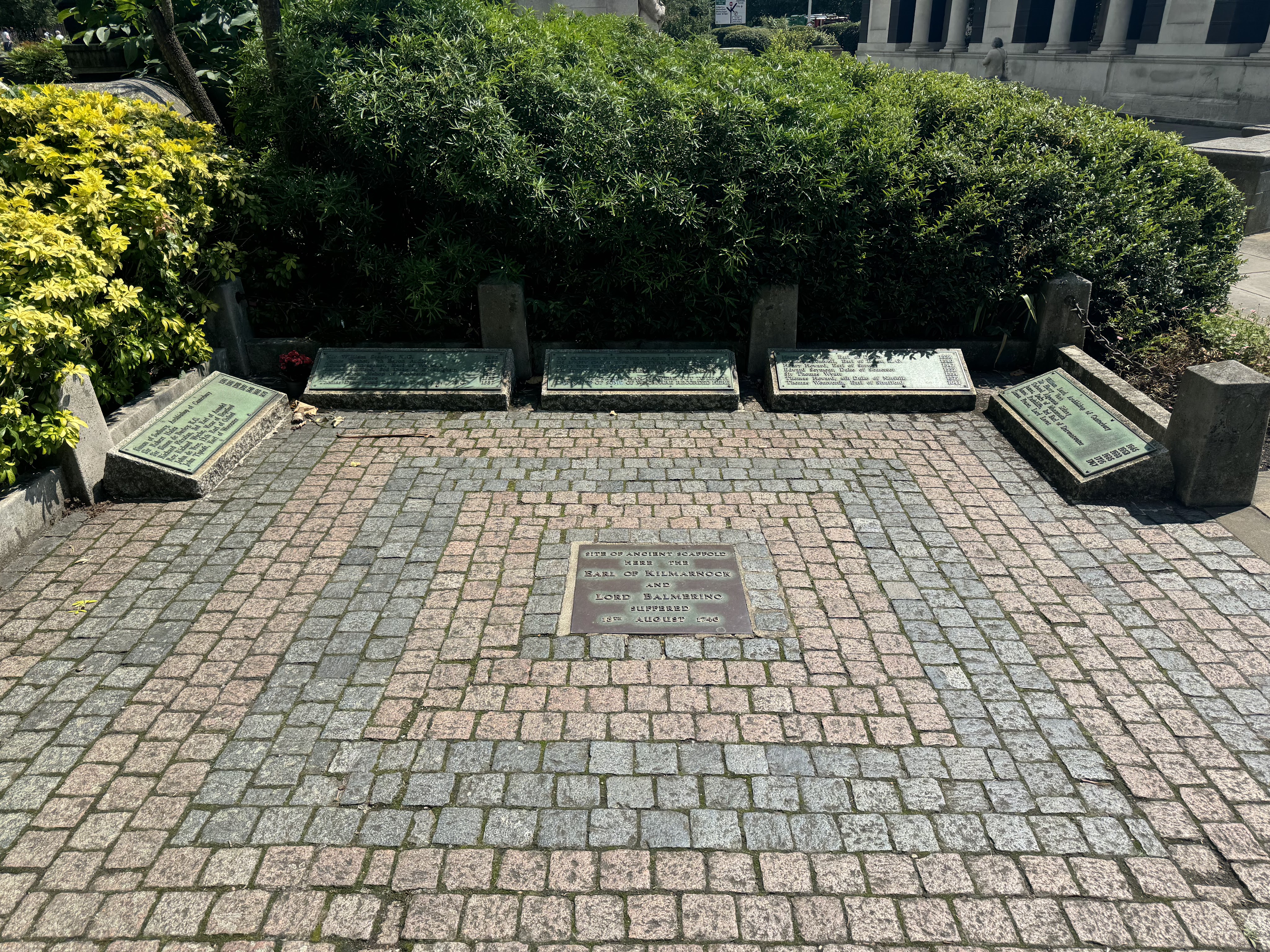
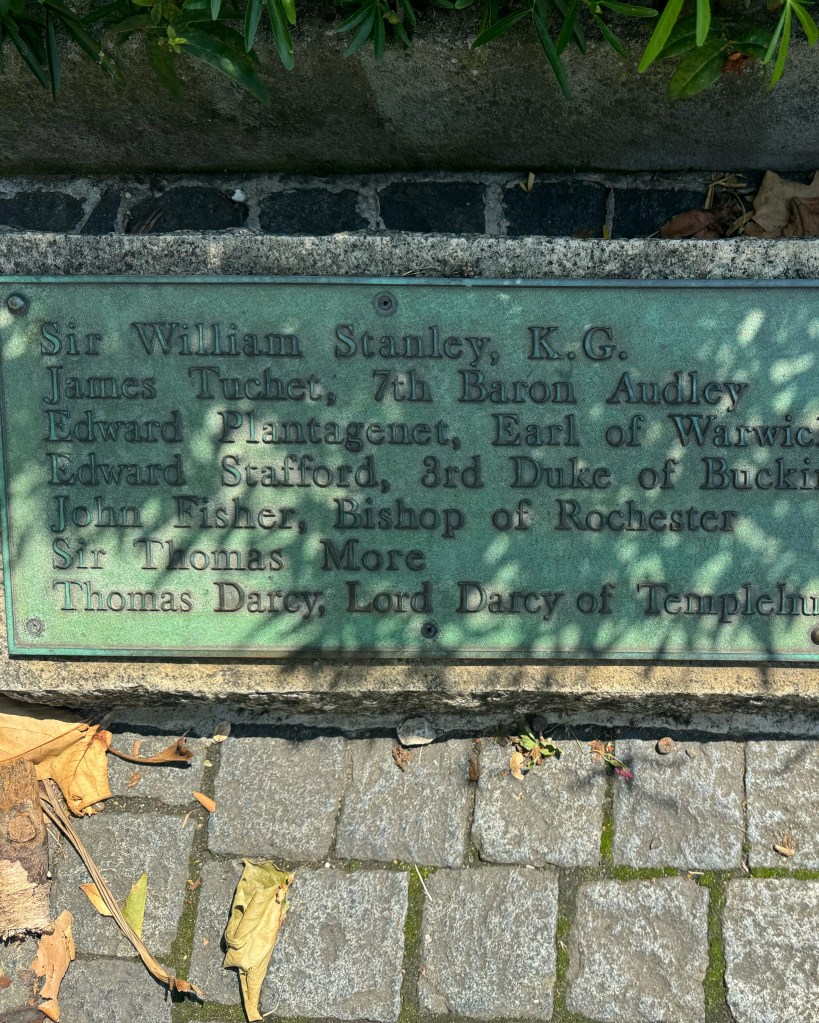
- The Tower of London: This is where More was imprisoned, along with many other English Catholic Martyrs, and eventually executed (note: actual execution spot is outside the Tower of London, across the street [see picture above] – only those who were royal were executed inside). Inside the Tower, you can check out Bell Tower, where he was held, and the Chapel of St. Peter ad Vincula, where he is buried in the wall of the crypt.
- Chelsea Old Church: More was a regular here, and it is where you can find the More Chapel, dedicated to his memory. The church was bombed during the Blitz in World War II but was rebuilt, so you can soak in the history.
- Lincoln’s Inn: This is where More trained as a lawyer. It’s one of London’s four Inns of Court and is a beautiful, historical spot right in the center of London that gives you a glimpse into his early career.
- St. Dunstan’s Church, Canterbury: A bit of a trek from London (easily done within a day via the train), but it is said to be where More’s head is buried in a vault belonging to his daughter, Margaret Roper. While in Canterbury, you can also visit St. Thomas Beckett’s shrine and many other historical Catholic places.
- Westminster Hall: Part of the Houses of Parliament, this is where More was tried and sentenced. Visiting it gives you a sense of the gravity of his trial.
St. Thomas More’s story is one of faith, courage, and integrity. His life and death remind us of the power of standing up for what we believe in, even when it comes at the highest cost. Whether you are a history buff, a Catholic pilgrim, or someone who enjoys exploring the stories of the past, following the footsteps of St. Thomas More in London is a journey worth taking.

 Hidden Catholic
Leave a comment