“Whoever loses his life for My sake will find it.” (Matthew 16:25)
Why Their Legacy Matters
Hundreds of Catholics gave their lives for the faith during the English and Welsh persecutions of the 16th and 17th centuries. Their sacrifices were often hidden, their names forgotten by history, their courage buried beneath centuries of silence.
In 1970, Pope Paul VI canonized forty chosen martyrs — a cross-section of clergy and laypeople, men and women, English and Welsh, old and young — as representatives of all who had suffered. Their canonization was not an act of reopening old wounds but a call to forgiveness, reconciliation, and the rekindling of faith. Today, the 40 Martyrs stand as reminders that truth cannot be silenced and that faith lived fully is never wasted, no matter the cost.
Canonization of the 40 Martyrs
The road to recognizing the martyrs formally was long. Individual English martyrs had been beatified across the 19th and early 20th centuries, but a united act of canonization was reserved for a small group representing the whole witness of English and Welsh Catholicism. Miracles attributed to the martyrs’ intercession were carefully investigated, particularly healings that could not be explained by medical science.
Finally, on October 25, 1970, Pope Paul VI canonized the 40 Martyrs at a moving ceremony at St Peter’s Basilica in Rome. In his homily, he declared that their sacrifice called for healing, not division, and for a renewed effort to seek truth and unity among Christians. The 40 were chosen to show the full diversity of the persecuted:
- Carthusians, Jesuits, Franciscans, secular priests, and lay men and women;
- Noblemen and commoners;
- Youthful zeal and seasoned wisdom.
Their blood, Pope Paul VI said, became the seed not of hatred but of hope.
How Their Legacy Lives On
Today, the 40 Martyrs are honored each year on May 4, the Feast of the English Martyrs. They are remembered not only in prayers but in shrines, pilgrimage routes, and living traditions that still stir the hearts of Catholics across Britain and beyond.
- Tyburn Convent in London:
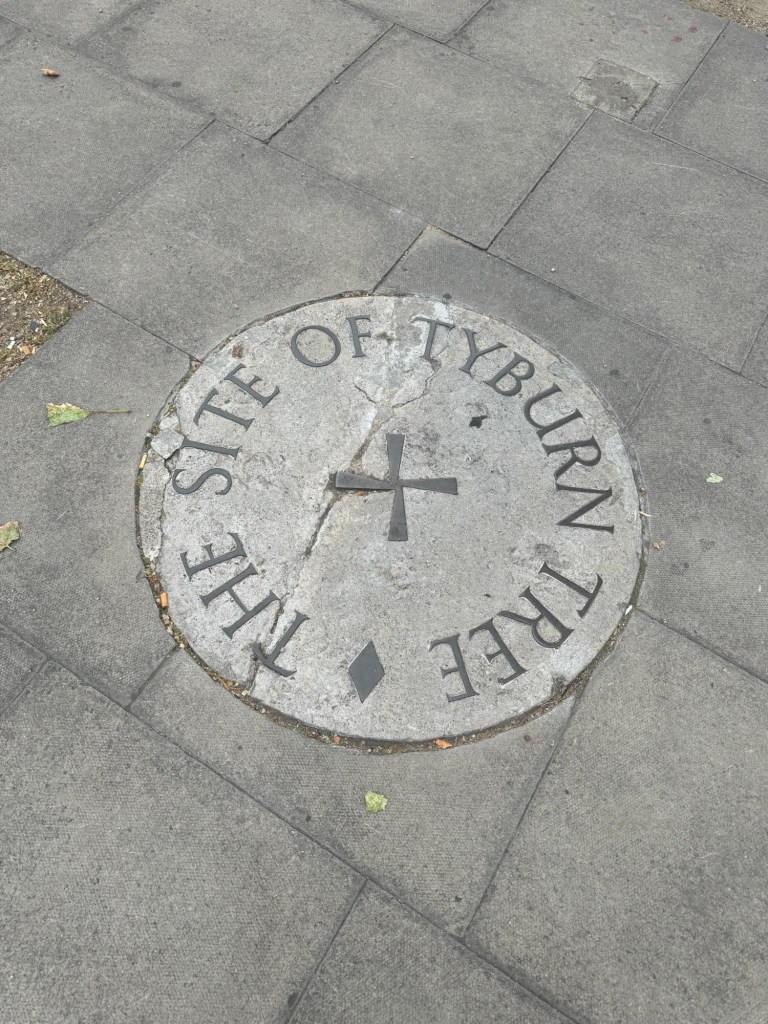
Built near the site of the infamous Tyburn gallows, the convent houses relics and a shrine to many of the martyrs, with daily prayers offered for their intercession. - Pilgrimages to Execution Sites:
Catholics today retrace the steps of the martyrs in York, London, Cardiff, and other cities — walking in the footsteps of those who chose Christ over comfort, and truth over compromise. - Impact on Christian Unity:
Their canonization emphasized that martyrdom was not about politics, but about conscience and fidelity to Christ. Their example reminds us Christians that the search for truth often demands sacrifice. - Modern Inspiration:
In an age where faith can be marginalized or mocked, the martyrs call Catholics to live their beliefs openly, courageously, and with love, whatever the cost.
The witness of the 40 Martyrs continues to be a light for our times, showing that the endurance of truth is not just an old story — it is a living call to each of us.
What to Do Next
Recommended Reading:
Blessed John Henry Newman and the Martyrs of England by Gerard Skinner — a thoughtful exploration of how the memory of the martyrs helped inspire the Catholic revival in 19th-century England.
Place to Visit:
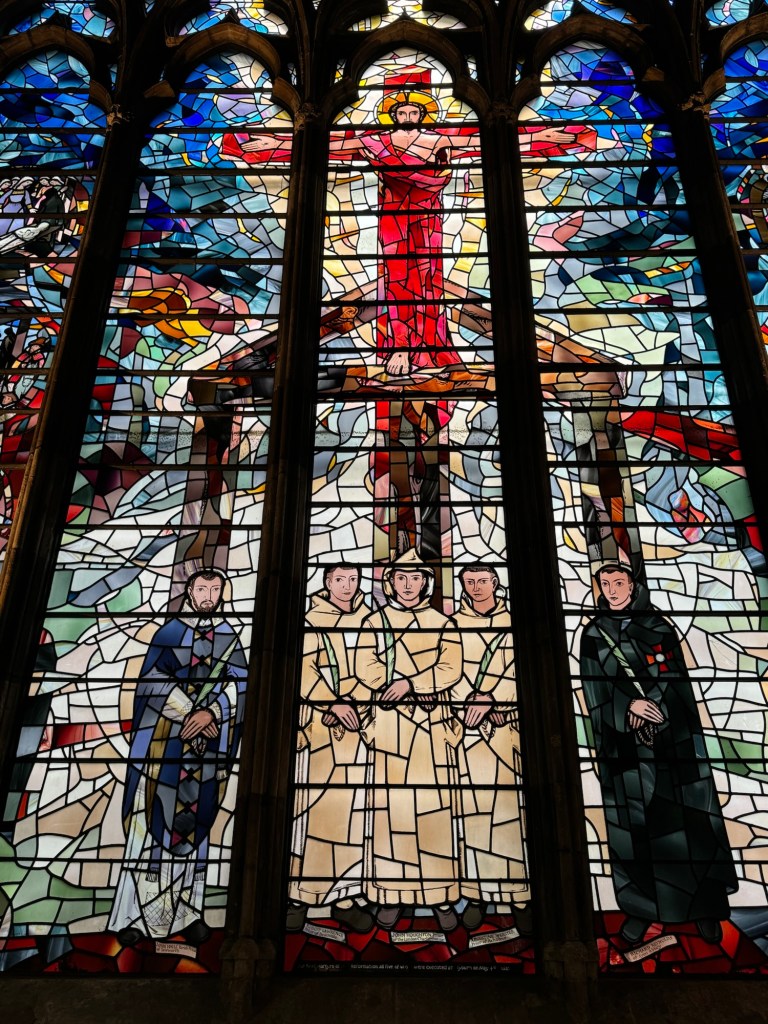
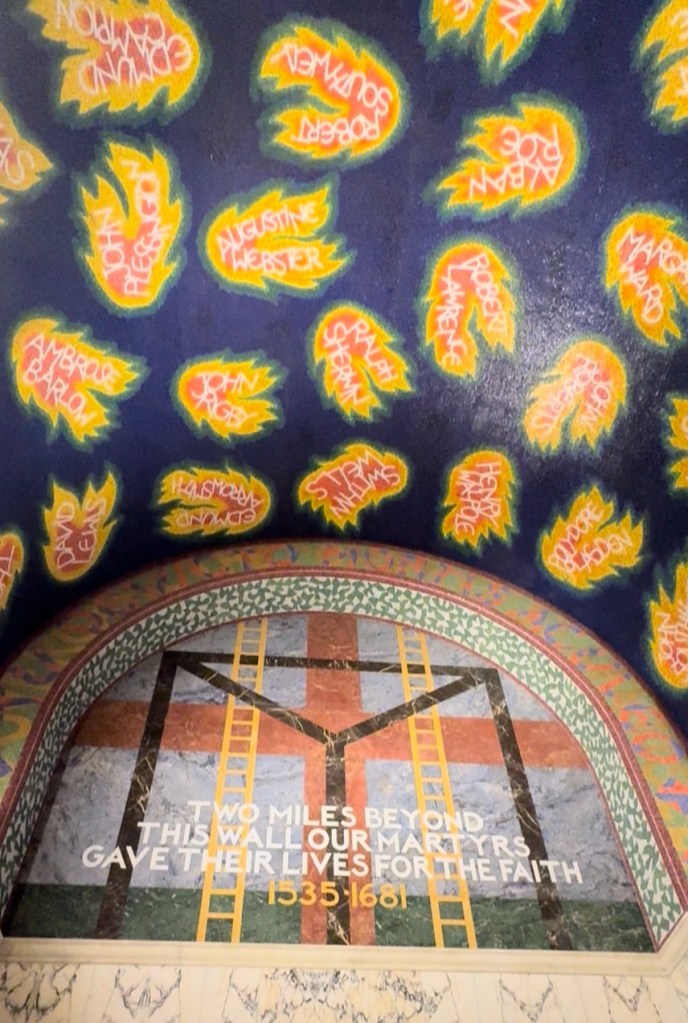
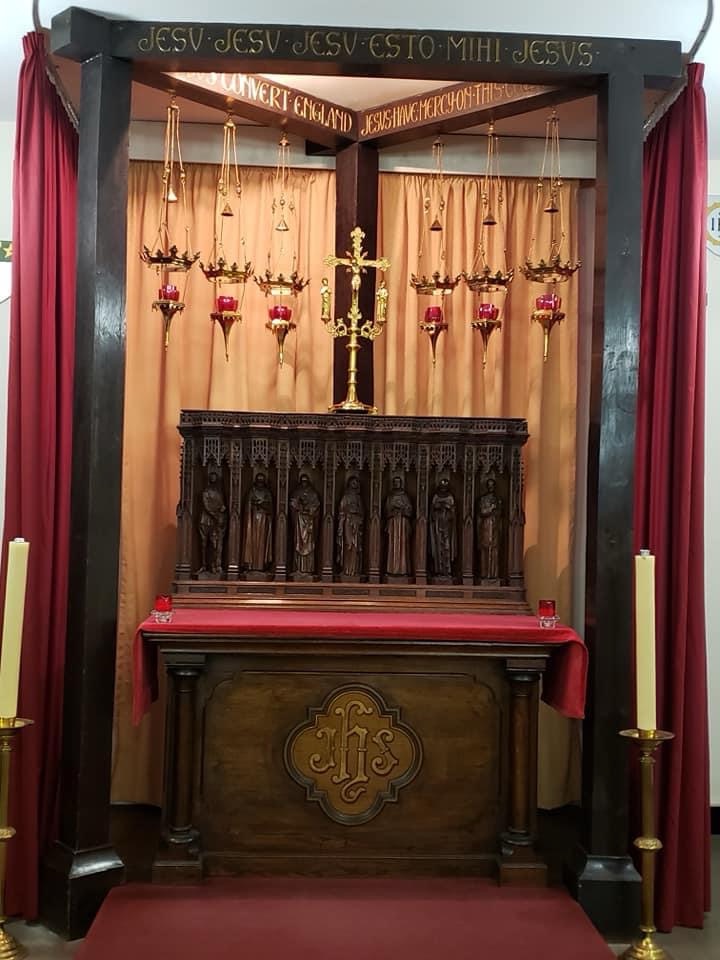
Westminster Cathedral, London — visit the Chapel of St Gregory and the English Martyrs, where prayers for the martyrs’ intercession are still offered, and where their witness is honored in beautiful mosaics and art.
Conclusion of the Series
The story of the 40 Martyrs is not a story of defeat — it is a story of hope, of hidden victories, and of an unbreakable Church. Their lives call us to remember that in every age, the call to faithfulness costs something — but what we gain is infinitely more: Christ Himself.
May we, like them, live and die faithful unto death.

 Hidden Catholic
Leave a comment