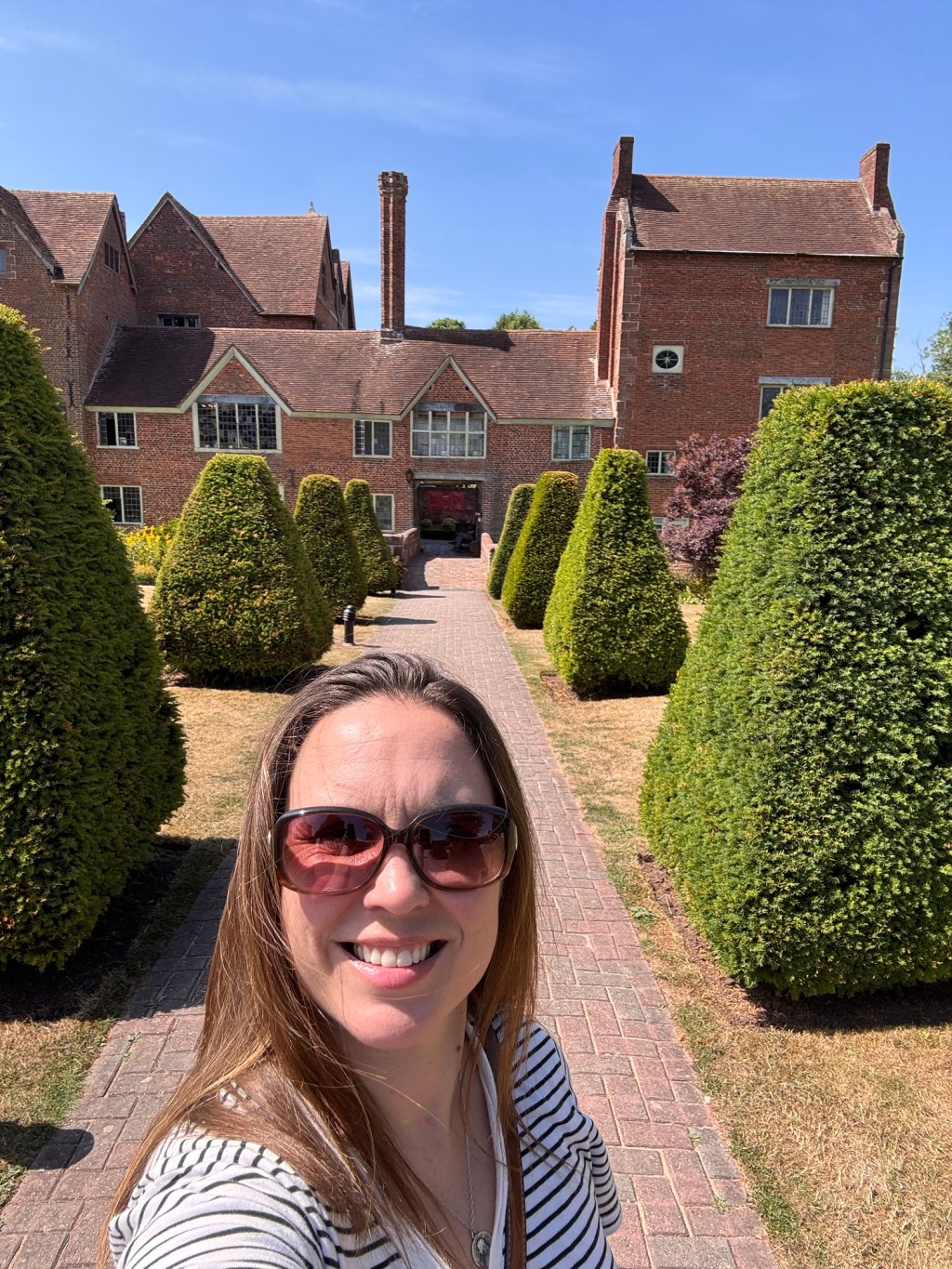
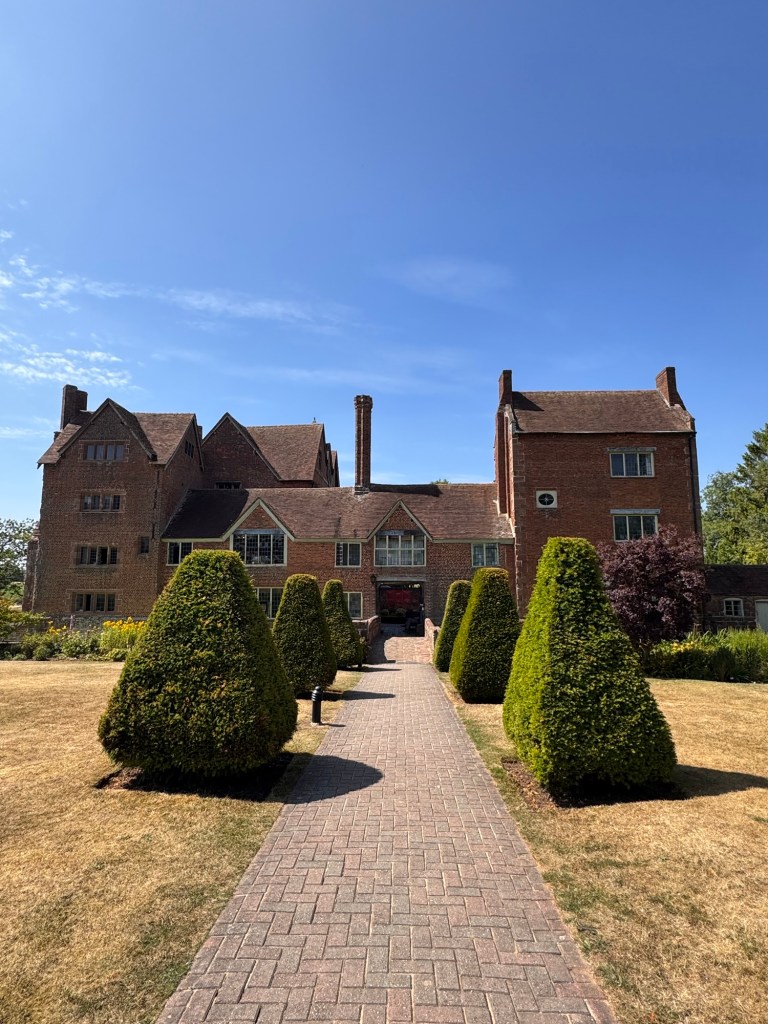
Tucked away in the Worcestershire countryside, Harvington Hall feels like a place the modern world forgot – and I mean that in the best way. The moment I stepped through the gates, I felt like I’d wandered into another century. It’s the kind of place where the walls whisper stories and the air holds centuries of memory.
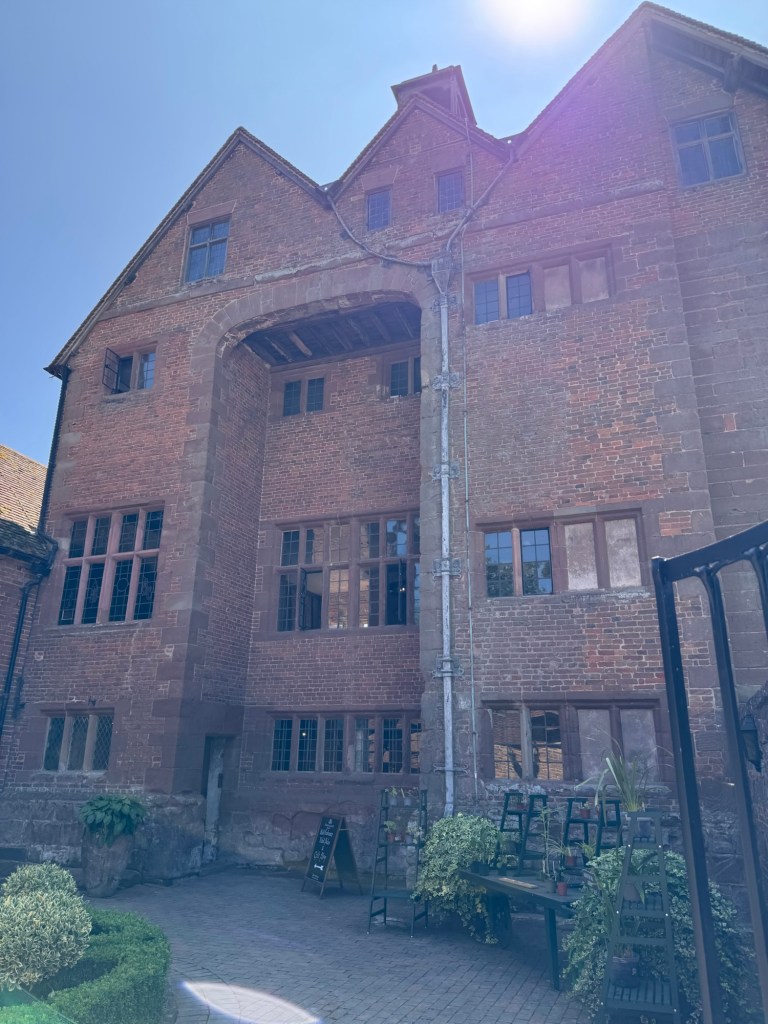
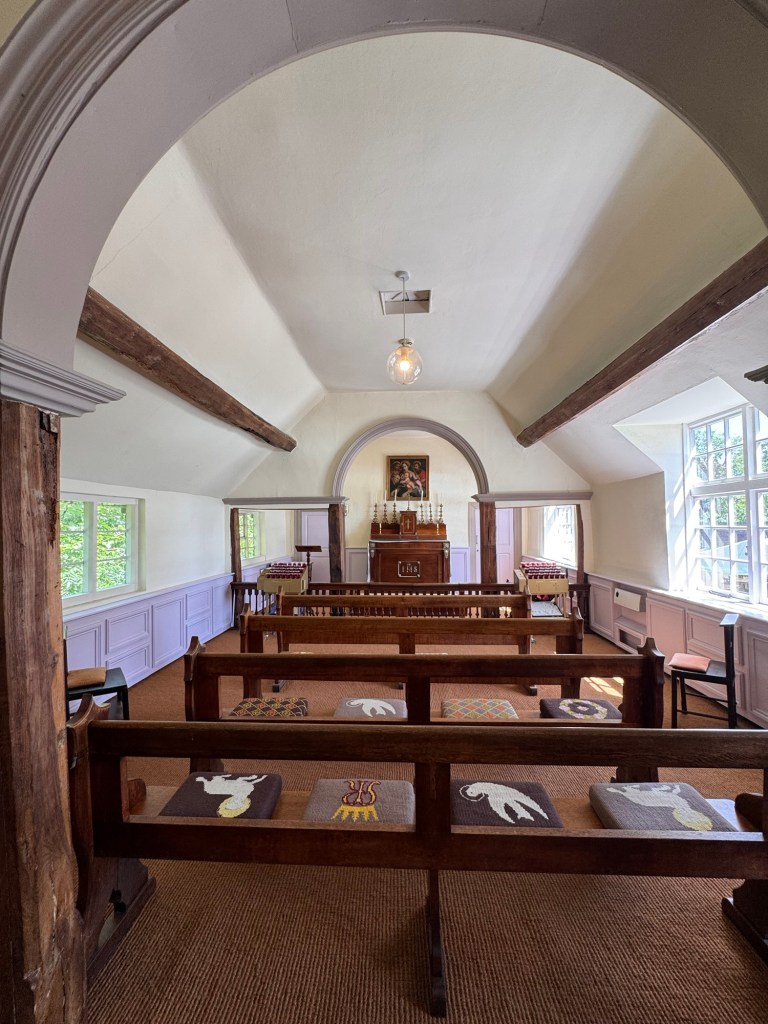
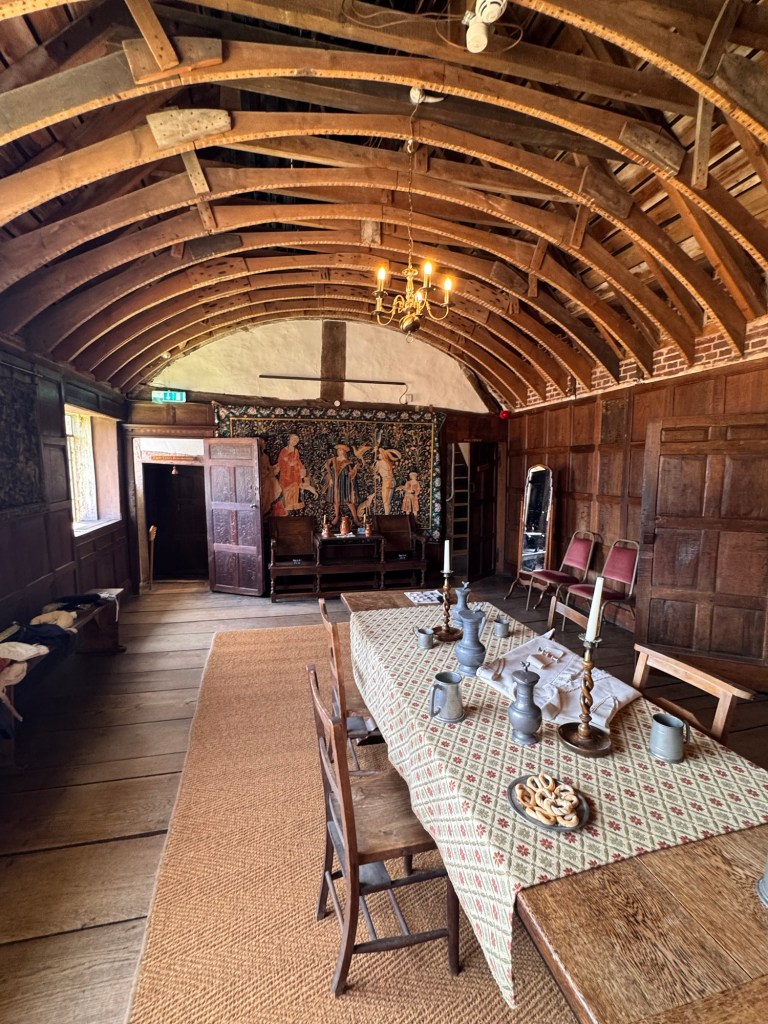
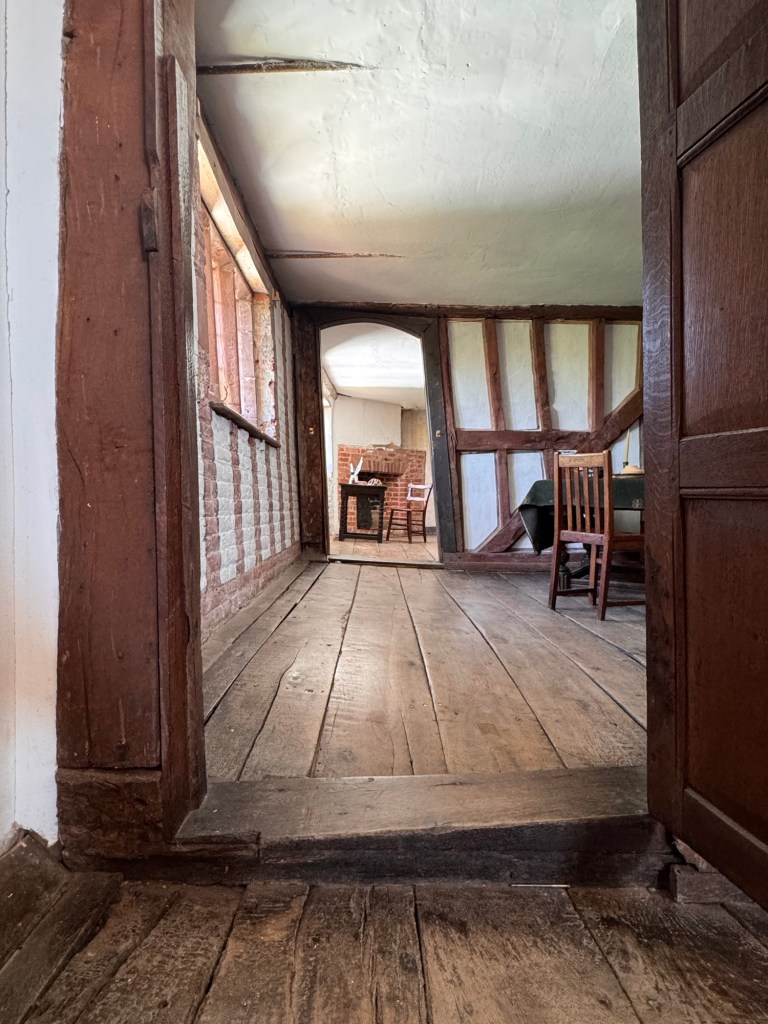
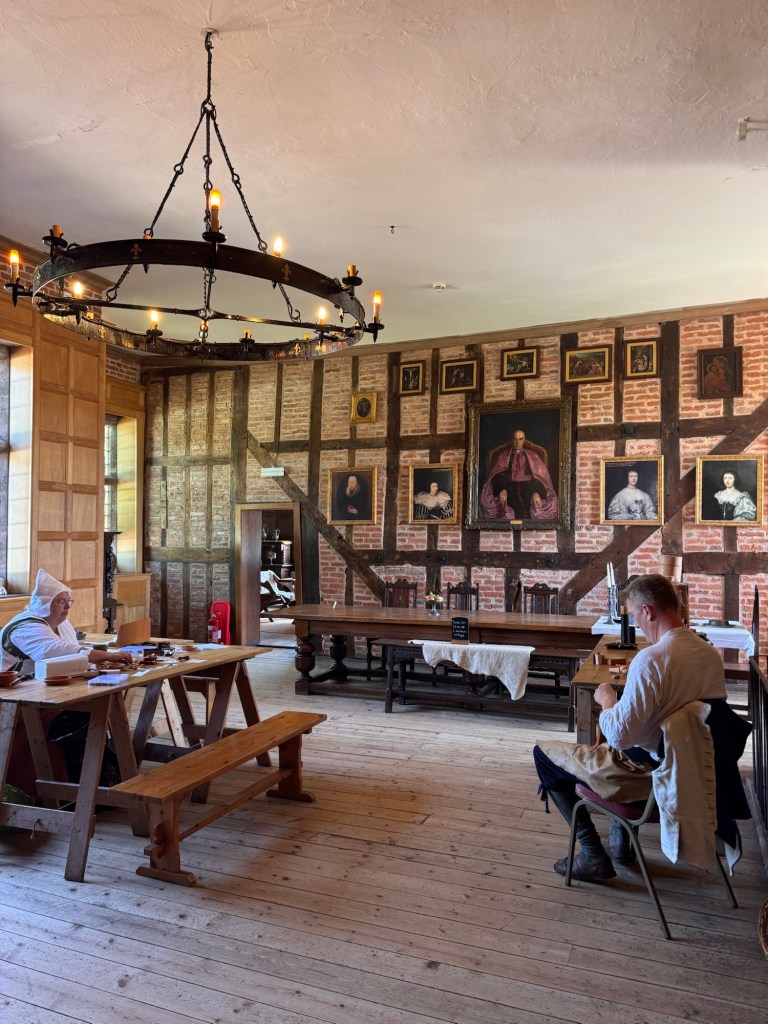
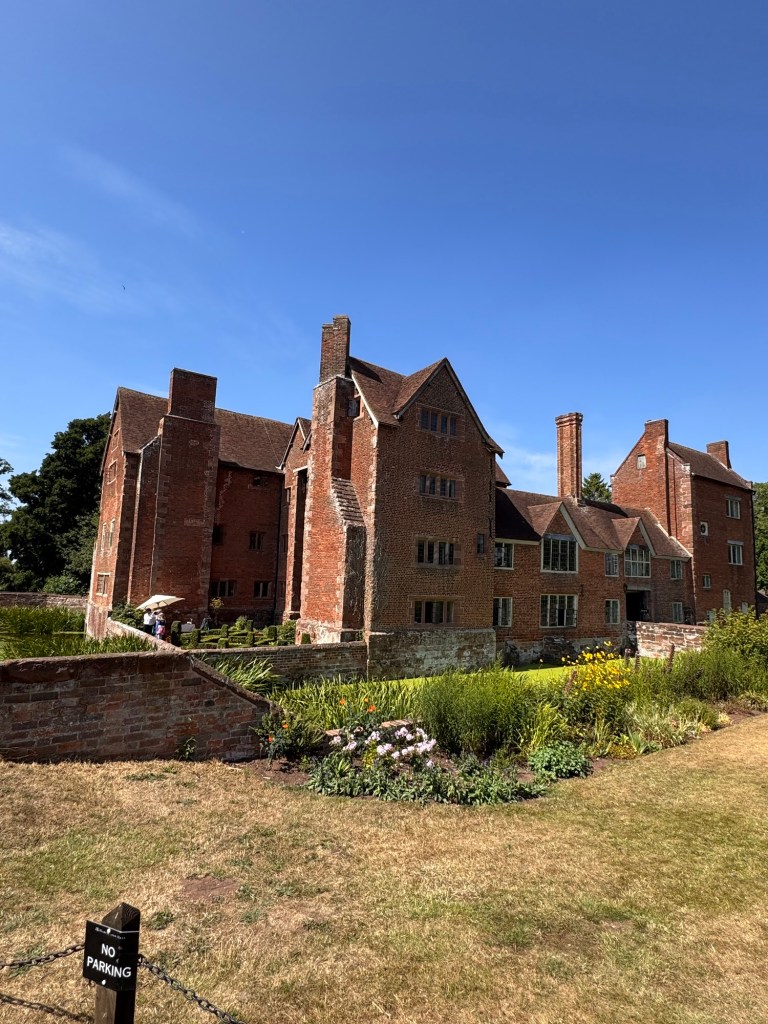
The Hall itself is striking – moated, red-bricked, and wonderfully askew. The floors tilt and creak beneath your feet, and it’s easy to imagine the shuffle of skirts on the stairs or the crackle of a fire in the great hall. Harvington is not a pristine, polished relic. It’s a survivor, with every beam, brick, and floorboard telling you it’s seen things, real things.
A House Shaped by Faith and Fear
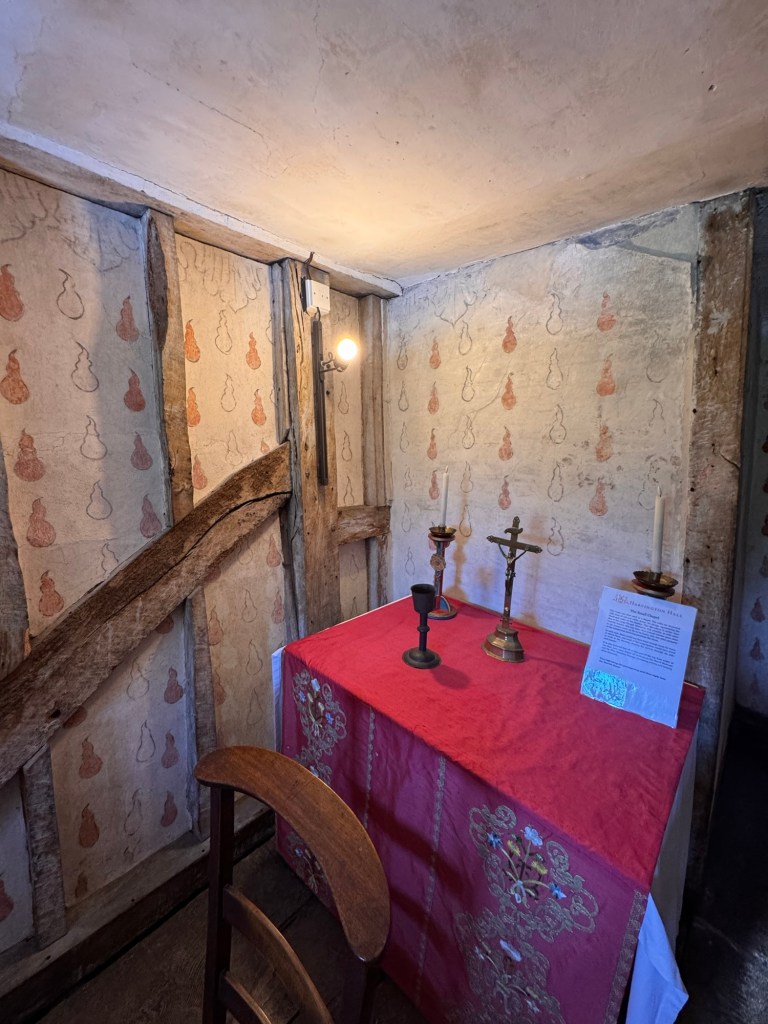
Harvington Hall dates back to the 14th century, but its most remarkable chapter belongs to the late 16th and early 17th centuries, during the reign of Elizabeth I and James I. It was a dangerous time to be a Catholic in England. The Reformation had turned the practice of the faith into a criminal act, punishable by heavy fines, imprisonment, or death. Priests, especially those trained abroad, were hunted down. Ordinary Catholics who harboured them risked the same fate.
Harvington became a refuge. Owned by the staunchly Catholic Pakington family, the Hall offered sanctuary to priests on the run. But it wasn’t simply a matter of welcoming them in – there had to be ways to keep them safe when searches came. That’s where the genius of St. Nicholas Owen comes in.
The Master of Disguise in Wood and Stone
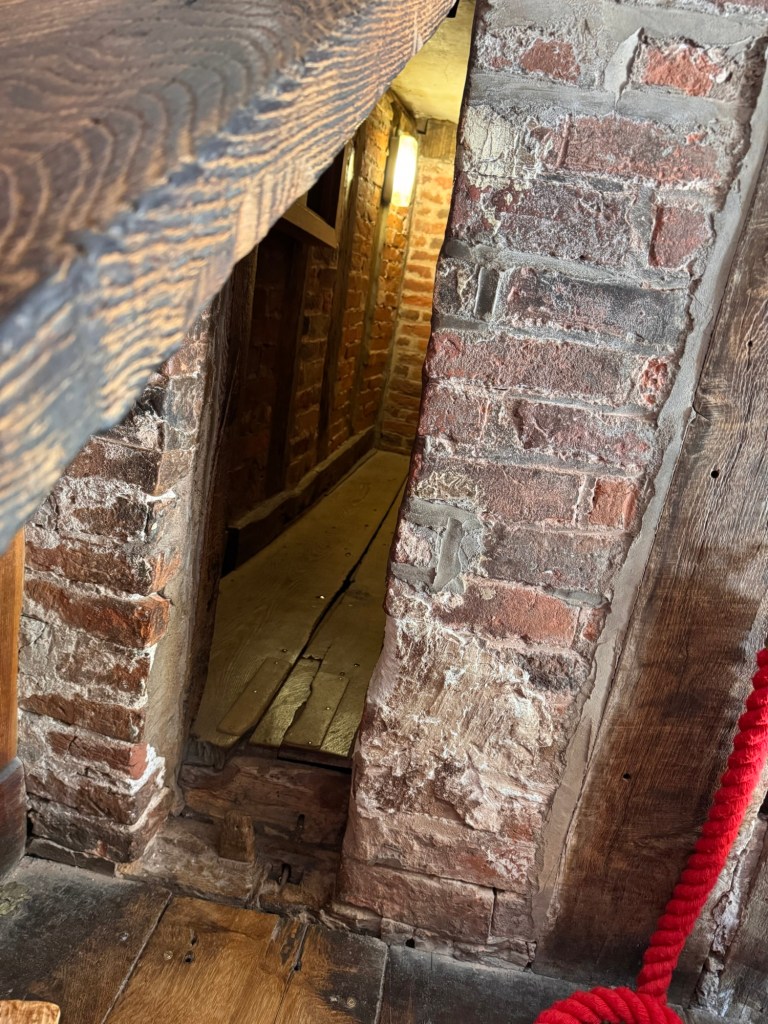
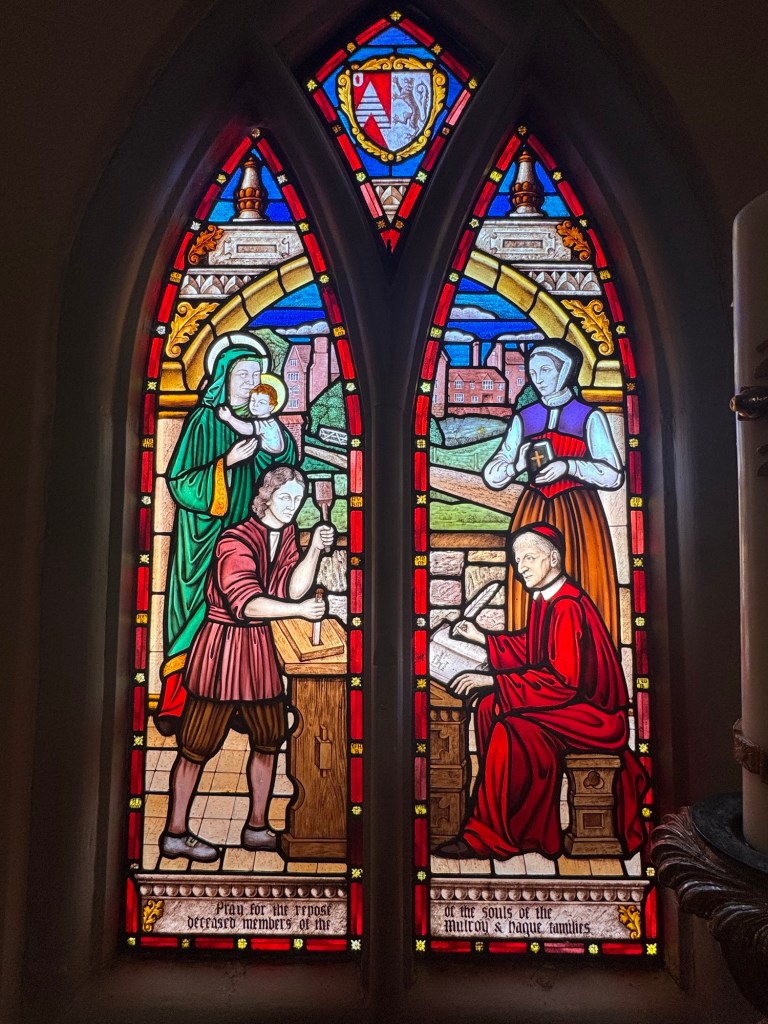
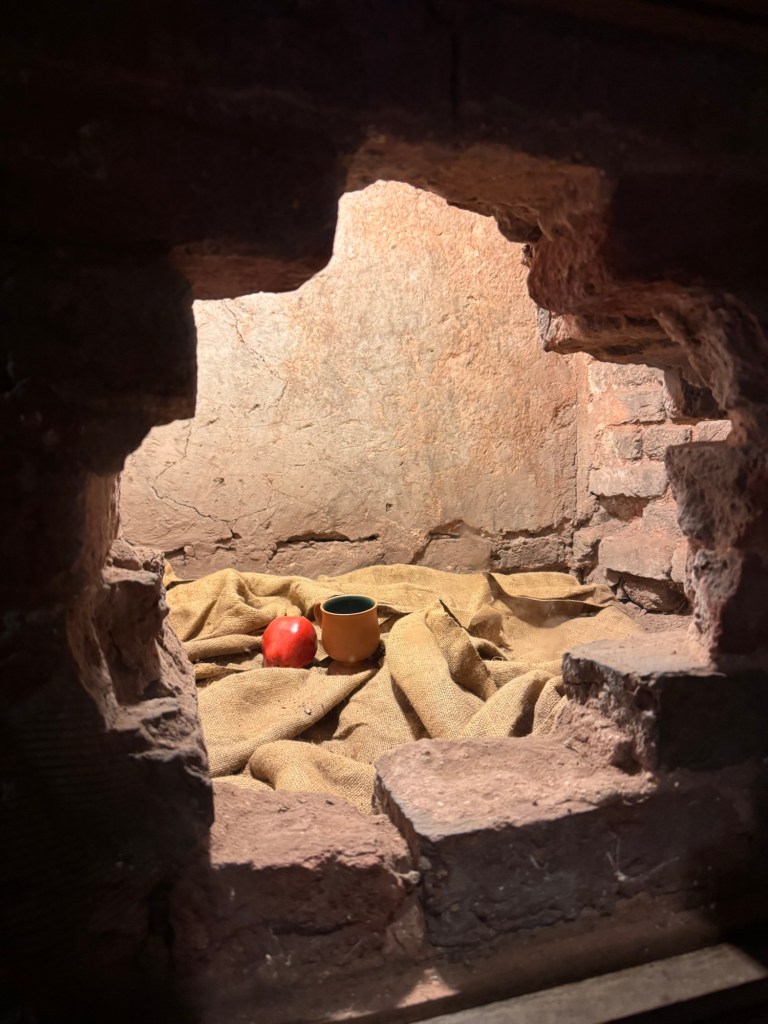
Owen, a lay Jesuit brother, was a master carpenter whose skill in creating hidden spaces saved countless lives. His priest holes were works of art – ingenious, deceptive, and often invisible even to the trained eye. Harvington boasts seven priests holes (two of which are known to be created by Owen), more than any other house in England.
One is concealed behind a false staircase, another tucked behind wooden post, one hidden in plain sight below the floorboards. These weren’t quick bolt-holes; priests could hide in them for days, sometimes over a week, during intense searches. Standing before one, I felt a strange mix of admiration for Owen’s brilliance and sorrow for the men who crouched inside, in darkness, trusting that the walls would hold their secret.
Owen himself was eventually captured, tortured, and martyred in 1606. He never revealed a single name other than his own. Harvington still stands as a silent tribute to his courage and craft.
Why Harvington Matters
Harvington Hall isn’t just a beautifully preserved Tudor house, it’s part of a much bigger story. Places like this remind us that history is not simply dates and dusty records. It’s people. It’s choices. It’s courage that came at an unthinkable cost.
During the 16th and 17th centuries, England’s Catholics faced relentless pressure to abandon their faith. Fines for not attending Anglican services could ruin a family. Harbouring a priest could send you to the gallows. Yet in quiet corners of the country, far from the watchful eyes of authority, families like the Pakingtons refused to bend. They turned their homes into sanctuaries, not knowing when, or if, the knock on the door would come.
Harvington is one of the finest surviving examples of these recusant houses, but it’s far from alone. Places like Baddesley Clinton, Oxburgh Hall, and Sawston Hall tell similar stories. They were ordinary homes that became strongholds of extraordinary resistance. Their priest holes, hidden chapels, and secret staircases were acts of both practical ingenuity and deep spiritual conviction.
Standing in Harvington, you realise that these buildings are not merely backdrops to history, they are active participants in it. The walls have sheltered the hunted. The beams have held the weight of people who risked everything for what they believed in. The floors, tilted and worn, carry the marks of lives lived in defiance of injustice.
For modern visitors, these houses are tangible connections to the faith, grit, and resilience of those who came before us. They ask questions of us: What would I have done in their place? What am I willing to stand for? And they quietly, steadfastly, answer their own question about what it means to remain faithful, even in the shadows.
Visiting
Harvington Hall is open to the public thanks to Mrs Ellen Ryan Ferris who purchased the Hall in 1923, restored it, and gifted it to the Archdiocese of Birmingham, who still own it today. If you’d like to experience Harvington Hall for yourself, and see how its history can enrich your own faith, come along with me!


 Hidden Catholic
Leave a comment